
The 5% Club Celebrates its Armed Forces Special Interest Group (AFSIG) in Parliament, Calling for “Proof Not Promises” from UK Employers
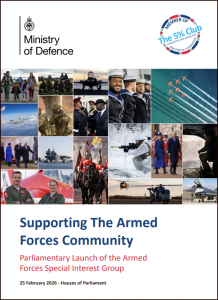
The 5% Club will host a landmark Parliamentary Reception at the House of Lords to formally launch its Armed Forces Special Interest Group (AFSIG) and unveil a its latest report, Supporting The Armed Forces Community Across UK Industry, featuring case studies of good practice already undertaken by members of The 5% Club.
Established to support the career transitions and development of the Armed Forces community — including veterans, service leavers, reservists, spouses, families and cadets — the AFSIG provides a collaborative platform for employers to share best practice, develop practical resources, and create structured career pathways that help integrate Armed Forces talent into the civilian workforce.
The Parliamentary reception marks a significant moment in strengthening employer–Defence collaboration, bringing together business leaders, policymakers and Defence representatives to accelerate practical, evidence-based action.
From Commitment to Delivery
More than 13,500 organisations have now signed the Armed Forces Covenant, with approximately 30 new employers joining every week. Yet members of the AFSIG have made clear that the next phase must move beyond commitment to measurable impact.
At its September meeting, the Group agreed to focus on four priority strands of work:
- Cadets
- Early Service Leavers (ESLs)
- Reservists
- Families and Spouses
As outlined in the newly launched report, this is “not about promises, but about proof.”
A National Workforce Opportunity – the scale of opportunity and the urgency for coordinated action:
- 3,173 Early Service Leavers left the Armed Forces in 2023–24 — many highly trained, apprenticeship-qualified and ready to progress.
- 95% of personnel complete apprenticeships during training.
- 140,000 cadets and 30,000 adult volunteers are developing leadership, resilience and teamwork skills across the UK.
- Around 20,000 reservist duty-days are delivered monthly in support of UK Defence.
- 64% of service personnel cite family impact as a reason for leaving.
- 35% of military spouses with degrees earn below £20,000, with 46% reporting interview bias.
Through structured “earn and learn” pathways, flexible policies, portable roles and targeted recruitment frameworks, employers can address skills shortages while strengthening national resilience.
Employer-Led, Evidence-Based Action
The AFSIG works in close collaboration with Defence stakeholders including Defence Relationship Management, the Career Transition Partnership (CTP), and MOD People policy leads. It also supports alignment with initiatives such as the Defence Skills Passport and Zigzag Careers.
Mark Cameron OBE, Chief Executive of The 5% Club, said:
“Employers have the power to transform lives through opportunity and skills development. The Armed Forces community represents extraordinary talent — disciplined, values-driven, adaptable and resilient. This Special Interest Group is about practical action. I invite you to join The 5% Club in shaping a stronger, fairer and more inclusive national workforce – one that matches opportunity with the extraordinary potential of those who serve. ”
A Call to Employers
The reception will call on employers across the UK to:
- Sign or strengthen their Armed Forces Covenant commitments.
- Progress through the Employer Recognition Scheme (Bronze, Silver, Gold).
- Embed best practice for reservists, service spouses, cadet volunteers and service leavers.
- Share measurable outcomes to shape future Defence–industry collaboration.
The Armed Forces Special Interest Group aims to unite employers committed to strengthening UK resilience through inclusive, skills-focused employment pathways.
A copy of The 5% Club’s latest Report, celebrating the AFSIG is available to download, Supporting The Armed Forces Community Across UK Industry.